In this episode, Chris Davidson, owner and operations manager at Blue Ridge Heating & Air, explains why HVAC installation quotes in Brevard can vary and why the lowest bid may not provide the best long-term value. He covers load calculations, ductwork and electrical requirements, installation shortcuts, factors unique to Brevard-area homes, and what homeowners should compare beyond price.
John Maher: Welcome to Clearing the Air, the Blue Ridge Heating and Air podcast, where we help homeowners in upstate South Carolina and Western North Carolina make smarter, more confident decisions about heating, cooling, indoor air quality, and whole home comfort. Today I’m with owner and operations manager, Chris Davidson, and our topic is HVAC installation in Brevard, North Carolina. Welcome, Chris.
Chris Davidson: Thanks, John. Glad to be here.
Why HVAC Installation Quotes Vary in Brevard
John: So Chris, when a Brevard homeowner receives several HVAC installation quotes, what are some of the things that explain the large differences in prices between the different companies?
Chris: That’s a really good question. I think first off, sometimes the scope of work can be confusing. Some companies include, let’s say, electrical in that scope to make sure that it’s taken care of properly. And in North Carolina in particular, a licensed electrician has to be involved in the scope of that. South Carolina lets the HVAC company handle pieces of that. So there’s a little bit of difference there. Also, things like plenums and drain pans, those kind of accessories can kind of begin to confuse the scope a little bit. So would really recommend that they compare side by side the scope of the change out. And a lot of the newer systems too, there’s duct work modifications that can be made to help the system breathe better and enlarging returns, those kind of things to try to improve. You just want to make sure all those things are apple-to-apples and that you’re getting a really, really good product in the end.
Load Calculations, Ductwork, and Proper System Sizing
John: And before recommending new equipment, what design work should a qualified HVAC contractor perform, including doing load calculations or duct work evaluations, proper system sizing and things like that?
Chris: Yeah, we’ve worked to train our sales folks and our comfort advisors and service techs on doing load calculations. We’ve invested in a new system that has the capability to scan rooms and actually use that information to provide a manual J load calculation for the home. And that just gives us the confidence that we’ve got the right size system in there.
And then from there, we can work to make sure that the duct work is sized properly, enough supplies to handle the supply air. Sometimes the tricky part is on the return side, you’ve got to make sure there’s enough return air or air going back to the system, and then that’s properly sized for that system that is in the home. So in North Carolina in particular, I’ve seen examples where some homeowners think a bigger system is sometimes better. They’ve got maybe a four ton versus a two ton, and then it doesn’t achieve its life expectancy and can create other issues with the structure of the home and those kind of things.
John: And the good news is that these days, those load calculations, like you said, are done with an iPad that scans the room and makes a model of the house. Gone are the days where you had to go in with a tape measure and be measuring each room and counting the number of windows that you had and things like that. All of these calculations are kind of done for you, right?
Chris: Yeah. We’ve really tried to invest in some of that advanced software and technology to be able to do that. So we’re picking the right size systems for the homes. So we’ll get the right answer and then you’ve got some confidence behind what you’re doing to pick that system.
Red Flags When Contractors Skip HVAC Design Work
John: So if a homeowner is interviewing several HVAC contractors and they’re not seeing a lot of them doing these types of scans of their home and doing these calculations, that might be a red flag immediately that, hey, you’re going to end up maybe with a system that’s undersized or, like you said, that’s oversized, a four ton system where it should be two tons.
Chris: Yeah. I mean, yeah, that could definitely happen if someone spends maybe 10, 15 minutes in the home and goes and looks at a couple of model numbers and recommends a size that may not be the appropriate solution for that house. So that’s why we want to do that load calculation when we’re [planning] the system.
HVAC Installation Shortcuts That Cause Costly Problems
John: What are some of the other installation shortcuts that companies might do, like improper refrigerant charging, poor drainage, undersized duct work, things like that that can maybe lead to higher utility bills, frequent repairs, or even a system failure down the road?
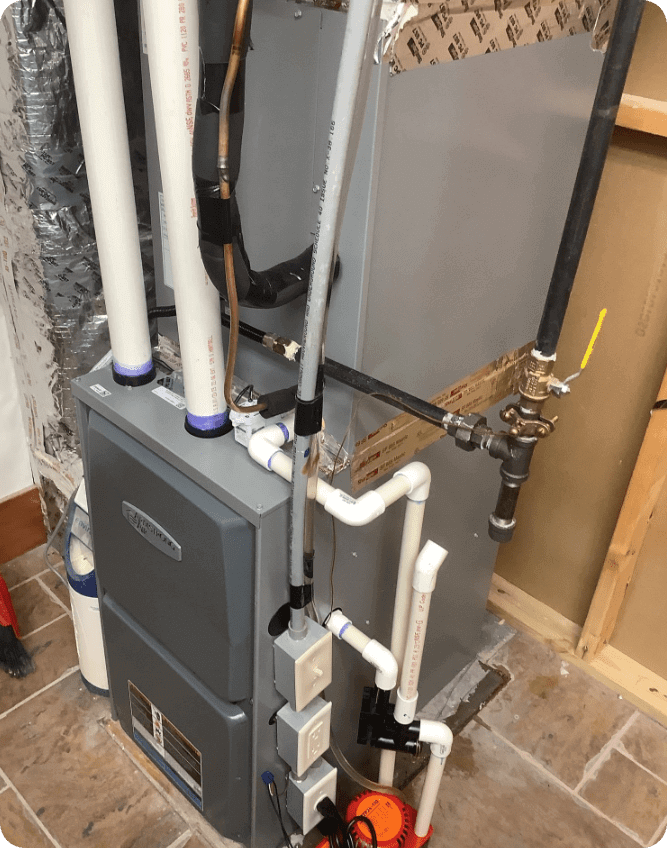
Chris: Some things that are kind of tricky is making sure the line set is properly sized. So the line set supplies the refrigerant from the outdoor unit to the indoor unit. And the diameter of that can be critical. So we look at the size of that, making sure that the system can handle what that is. So we spend time doing that.
If there are structural issues where that’s run through the wall and we need to review that with an engineering design team, we’ve got to really work really well with Armstrong. They’ll help us work through that, making sure we’ve got the right equipment installed in the right application. Those are kind of things to really watch out for. And when it gets to the return of the system, like I said earlier with the system breathing.
And then sometimes the electrical can be the wire size isn’t properly sized, going into the heat kit, those kind of things. So the amp draw isn’t right for what the home is and that wire needs to be replaced. So there’s kind of all tricky things that need to be reviewed and properly looked at before a system can be changed out.
Designing HVAC Systems for Brevard-Area Homes
John: What are some factors that are maybe common to Brevard area homes in particular, like older construction, additions, crawl spaces, humidity, elevation differences between home to home that can affect the way that an HVAC system should be designed and installed?
Chris: Yeah, Brevard can be a little bit tricky because technically it’s like a rainforest, so it can have high humidity there, and then getting that right size system is important, making sure that it’s oversized maybe a little bit as far as design calculation, but not massively to make sure they’ve got more heating hours versus cooling hours. That’s something that’s pretty tricky up there. And then also the electrical sometimes can be tricky. Sometimes you’ve got to switch customers from baseboard heating over to a heat pump or something like that. You’ve just got to make sure you work through the electrical in a proper fashion to get that all taken care of.
Converting Baseboard Heat to a Heat Pump
John: What are some of the specific issues with changing out from a baseboard type of heating system to maybe a heat pump system?
Chris: Yeah, the basic thing is that electrical and making sure that the duct work is properly laid out because that baseboard heating may or may not have duct work involved in that house, probably not. So you’d have to make sure that that’s properly run with the proper returns and then make sure the electrical is all sorted out. And sometimes that can be underestimated in a project and it can appear more expensive to a homeowner than maybe other estimates, but we just want to make sure we get it right. So that’s something that we look for.
How to Compare HVAC Contractors Beyond Price
John: And then, finally, what should homeowners compare besides just the bottom line price when they’re comparing between different HVAC contractors and things like licensing and insurance, permits, warranties, installation procedures? What are some of those types of things that people should really be making sure that they look at and they’re not just only focused on the price?
Chris: Yeah, I mean those are things that if I were a homeowner to buy a system, I want to make sure that you’ve got a licensed contractor that’s insured, that’s going to do a good quality installation. And that’s one of the most important days in its life is when it’s installed. And then they’re there to support the system after. To be transparent, not all system installs go according to plan, and you’ve got to adapt a little bit, and then you want a service department that’s there to help and come and make sure that you can take care of those issues.
Because it’s rotating equipment, stuff does break on startup and it does break in the future and you want to make sure that you can address it and try to move forward. So that’s why we’ve partnered with some pretty good brands that have some unit replacement warranties in there and we can try to get that homeowner maybe a new outdoor unit if a compressor failed on startup or something like that versus just changing that compressor out.
Those would be kind of things that we’ve tried to focus on because we want to make sure we get them a really good quality unit that will last a long time.
John: All right, well, that’s really great information, Chris. Thanks again for speaking with me today.
Chris: Thanks John. Thanks for the time.
John: And for more information, you can visit the Blue Ridge Heating and Air website at blueridgeheatingair.com or call us in the Greenville, South Carolina area at 864-485-6509 or in the Brevard, North Carolina area, call 828-415-3339.