Seminar Throwback: Micro-Zoning & Precision Climate Control

“You can’t control the wind, but you can adjust your sails.” — Jimmy Dean
At our October educational seminar, local homeowners joined our team to explore one of the most dynamic topics in modern HVAC: micro-zoning and precision climate control. The session, led by Comfort Advisor Pete Threlkeld and HVAC expert Brian Wilson, was packed with practical examples, thoughtful homeowner questions, and real-world solutions to common indoor comfort issues.
Whether you’re battling temperature swings between floors, wondering how to condition a sunroom, or just trying to save money on energy bills, this seminar delivered clarity and options. Below is a full recap.

Why Zoning Matters in the South
In the Southeastern U.S., our homes face unique climate challenges. Humidity, intense summer heat, and homes designed with open spaces or bonus rooms can all contribute to uneven comfort.
“Here in the sunny South, Southern homes often suffer. ” Pete said. “You’ll see a hot upstairs and a cold downstairs.” These temperature imbalances often come down to the limits of a single-thermostat system. A traditional HVAC system, managed by one central thermostat, can only read and respond to the temperature where that device is located. That leaves remote rooms at the mercy of architectural quirks, sunlight exposure, and insulation differences.
“It’s like heating the whole oven just to toast one Pop-Tart.” — Pete Threlkeld, Blue Ridge Heating & Air

What Is Micro-Zoning?
Micro-zoning is the process of dividing a home into independently controlled zones. Each zone can have its own heating and cooling schedule, temperature setting, and in some cases, dedicated equipment. This can be accomplished in several ways:
- Ductless mini-splits with individual controls
- Motorized dampers in ductwork linked to multiple thermostats
- Smart thermostats and occupancy sensors
The key idea? Your HVAC system only conditions the rooms you’re actually using. Like how you wouldn’t turn all of the lights in your house all at once, you’d go room by room.
Ductless Mini-Splits: A Deep Dive
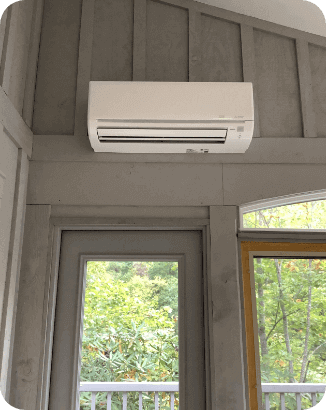
A major part of the seminar focused on a popular solution for micro-zoning: Mitsubishi ductless mini-split systems. These systems consist of one outdoor condenser and up to eight indoor air-handling units, each serving a specific zone.
Benefits include:

- No duct losses (which can account for up to 30% of HVAC energy waste)
- Whisper-quiet operation
- Faster heating and cooling response
- Ideal fit for rooms that need extra help, like sunrooms, additions, or upstairs bedrooms
Some examples where mini-splits have made a significant difference:
- Sunrooms that are too hot to use in summer
- Guest rooms that rarely need conditioning
- Teen bedrooms where personal temperature control ends thermostat battles
Each indoor unit can be wall-mounted, recessed in the ceiling, or even floor-mounted. They also come with smart remote controls, and many can connect to mobile apps like Kumo Cloud for remote management and scheduling.

Smart Sensors & Intelligent Airflow
Brian explained that some advanced mini-splits include motion and heat sensors. These features allow the system to:
- Adjust airflow direction
- Reduce output when a room is empty
- Increase comfort automatically based on occupancy and activity
“It looks like it’s watching you,” Brian joked, referring to the small ‘eye’ on certain models that detect motion. These sensors not only improve comfort but also reduce wasted energy, especially in rooms used infrequently.

Real-World Q&A: Homeowner Concerns
Throughout the seminar, homeowners posed thoughtful questions. Some highlights included:
Q: Does sunlight affect mini-split performance in a window-heavy room like a sunroom?
A: Yes. Each system is sized based on a “heat load calculation” that factors in windows, sunlight, insulation, and more.
Q: Why are newer units vertical (side-discharge) instead of traditional top-discharge?
A: Side-discharge units prevent leaves and pine needles from falling into the fan, and they can be tucked under decks or raised above snow lines. They also support self-cleaning cycles.
Q: How do these systems manage humidity, especially in well-insulated homes?
A: A well-sealed home may not run the air conditioner enough to manage humidity. Brian recommended whole-home dehumidifiers, especially in shoulder seasons where cooling isn’t needed but humidity still creeps in.
Q: What if my home has multiple levels with separate systems? Can they be connected?
A: In some cases, adjacent systems (like basement and main floor) can be made to communicate. But for independent upper-level systems, cross-connection is rarely practical.
Q: Can I add a humidifier without major electrical work?
A: Yes. New bypass humidifiers like those from Aprilaire require less power and use water more efficiently than older models.

Efficiency Gains from Inverter Technology
Mini-splits use inverter-driven compressors, which operate more like cruise control than a traditional start-stop HVAC system. This means:
- Lower startup energy draw
- Longer, more consistent operation at low speed
- Fewer temperature swings
“Your old AC is like flooring the gas at every stoplight. An inverter system eases into it and eases out of it.”
Brian added: “They tend to run longer at a lower speed, maintaining the temperature where you don’t have that up-and-down swing.”
This helps the home feel consistently comfortable while using less electricity.

Financial Considerations: Efficiency and Rebates
While exact pricing can vary by region and installation complexity, the ArcticFlex fits into a mid-range cost bracket relative to SEER ratings:
- Duke Energy also offers up to $900 in rebates for qualifying systems in both North and South Carolina.
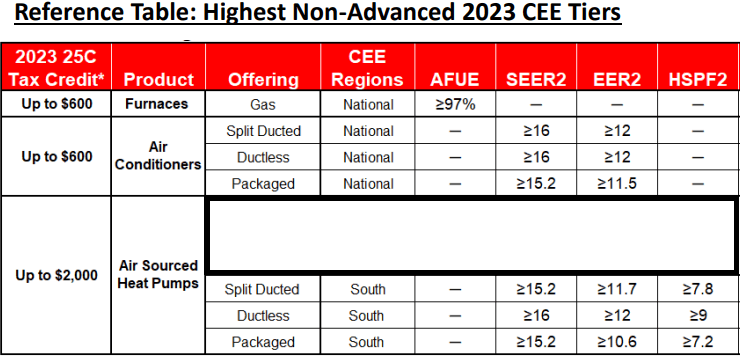
- Up to 18 SEER2 and 10 HSPF2, putting it well above minimum efficiency standards for federal tax credit eligibility.
- Models between 1.5 and 3 tons qualify for up to $2,000 in federal tax credits (Internal Revenue Service, 2023).
Maintenance & System Care
One attendee asked about the maintenance needs of ductless systems. Brian explained:
- Clean washable filters monthly
- Flush drains to prevent blockages
- Check coil cleanliness and electrical connections
“There’s not a whole lot to do for them,” he added. “They’re very good systems.”
- Reduce the risk of major failures by up to 95% (ASHRAE, n.d.)
- Improve system efficiency by up to 30% (U.S. Department of Energy, n.d.)
Proper filter use and annual tune-ups are critical to extending lifespan and maximizing performance.
Need help? Our Blue Ridge Comfort Plan includes two annual tune-ups, priority scheduling, repair discounts, and more to protect your HVAC investment.

Final Thoughts and Recommendations
How do you know if you might benefit from micro-zoning? Ask yourself these questions:
- Do you have rooms that are too hot or too cold?
- Are you paying to heat or cool unused spaces?
- Do you want more individual control over temperatures?
- Are you interested in lowering your energy bills?
If you answered yes to any of the above, zoning (especially through mini-splits) might be right for your home.
“Every system is different. We want to design a comfort solution around your home, not just sell a product.” – Brian Wilson, Blue Ridge Heating & Air
Heating and Cooling Issues? Click Here!
📞 Want to explore zoning for your home?
We’re here to help. Contact us for a no-obligation comfort consultation and let our experts evaluate your home for smarter, more personalized heating and cooling.
✅ Get a quote
✅ Get it done right
✅ Sleep better
References:
- American Society of Heating, Refrigerating and Air-Conditioning Engineers. (n.d.). ASHRAE preventive maintenance guidelines. https://www.ashrae.org/
- Internal Revenue Service. (2023). Energy efficient home improvement credit (Form 5695). U.S. Department of the Treasury. https://www.irs.gov/credits-deductions/energy-efficient-home-improvement-credit
- U.S. Department of Energy. (n.d.). Heating and cooling. Office of Energy Efficiency & Renewable Energy. https://www.energy.gov/energysaver/heating-cooling
Micro-Zoning Seminar: Transcript
Pete: So today we’re talking about micro zoning and precision climate control. I’m Pete.
I’m the comfort advisor. And Brian Wilson here is the brains of the business. He’s forgotten more than I know. So any good questions you have, he’ll be the one to answer it. And we’ve got Baily in the back, who’s our marketing specialist. We’ve got Mark and Augustine with us as well.
So we’ve got a lot of experience and knowledge here in the room. So let’s get started. So micro zoning and precision climate control. It’s a smart way to stay comfortable, but without wasting energy. Baily put us in here. “You can’t control the wind, but you can adjust your sails.” And Baily is the creator of this content today. With Brian, of course.
So “why zoning matters here in the south”. Here in the sunny south, southern homes often suffer. And we’ll see this a lot. You’ll see a hot upstairs and a cold downstairs. Cooling, we also zone because we’re cooling unused rooms. So you’re wasting money by cooling a room that no one’s ever in. One thermostat can’t manage multiple comfort zones, and zoning increases comfort and lowers your energy bills. Cooling smarter is making intentional, informed choices that will work best for your environment.
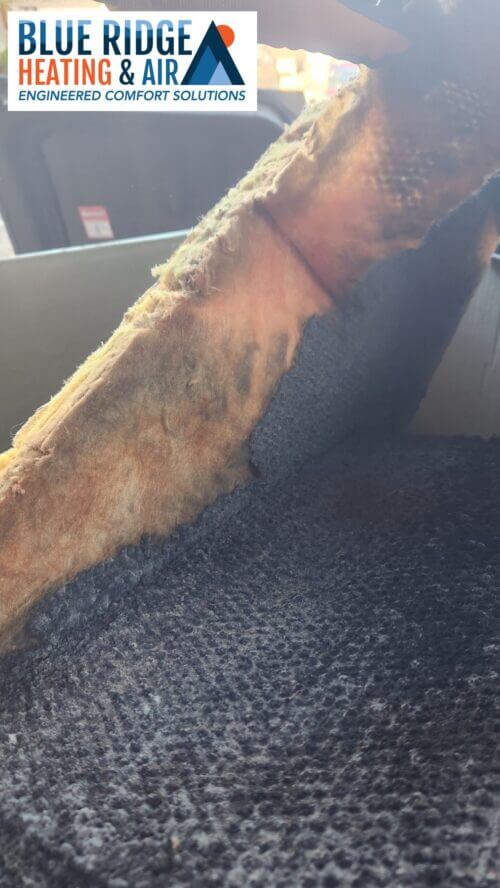
So what is micro zoning? It divides your home into zones, each with individual comfort control. We use smart thermostats, dampers, or ductless units per zone to control that. Systems are adjusted based on occupancy, usage, and the time of day. So Baily’s got a good point here. Think about your home’s lighting: you don’t go in and turn the switch on and light the whole house. You go room by room to turn the lights on for when you’re using them. That’s what zoning pretty much is talking about. We’re cooling the room that you’re in, or heating the room that you’re in, and not so much worrying about the other ones until you’re occupying them. So here’s a pro tip from Baily. If your unit outside looks like that, you need maintenance. And we’ve got these three guys here ready to do it whenever you need us.
So the first zoning that we’re going to talk about is Mitsubishi Mini Splits. So are they right for your home? Each room gets its own indoor unit, kind of like this one up here.That’s a big one, so they’re not all that big. For small rooms, you have a smaller unit. It works with a multi-zone outdoor unit. So you can have one outdoor unit and it can take up to eight indoor units. So you can do your whole house with one outdoor unit. With these Ductless Mini Splits, you don’t have any air loss from ducts leaks into the attic or leaks into the crawl space. You get every bit of the conditioning delivered right into your room. They’re very quiet. I think this one’s on right now and you can’t hear it. This is an older one, but there’s some really fancy, sleek designs out there. They’re perfect for bedrooms, basements, sunrooms, bonus rooms. We’ve had folks install them into their hobby huts, is what I call them, or she-sheds. If you can get her out of the house out there, out of your ear, then hey, control that room.
So ductless, no duct loss, it’s better performance. He says this, imagine your home’s like a hotel. Each room has its own AC unit and thermostat, and that’s what we’re talking about here. So everyone gets what they want without arguing over the thermostat. Say if you’ve got a guest room that you want to put that in and nobody’s in there, you just turn the thing way down so that it doesn’t come on. Some of them have a smart sensor in it that will come, if somebody’s in there, that’s when it comes on and controls the room. They’re very efficient and very fast as well.
And we also have smart sensors and intelligent airflow with those. Sensors detect motion, I got ahead of myself there, and heat patterns, and it’ll adjust the airflow direction and temperatures based on activity, so it’ll help reduce cooling waste in empty rooms. Any questions? Alright, we’ll move along.
So we’ve got wall-mounted panels for these. There are some that are mounted close to the floor, and then we have ceiling-recessed mini-splits as well. You’ve got remote controls that will control it, so each one has its own control and thermostat, and you can also use the app that’s connected through Kumo Cloud so that you can control these things from the beach if you want to. And you can set schedules and set it to come on at a certain time of the day or shut off at a certain time of the day.
Efficiency and energy savings. The future of heating and air conditioning is smarter, cleaner, and more efficient. So stop cooling rooms that nobody’s using. Inverter technology runs smoother and cheaper. These things are heat pumps, in essence, and they’re inverter-driven, so it’s smoother, cheaper. You can get up to 40% energy savings on these. So your old AC is like flooring the gas at every stoplight. An inverter system eases into it and eases out of it, like cruise control, which is better for your comfort and power bill.
Brian: With that, they tend to run longer at a lower speed, maintaining the temperature where you don’t have that up-and-down swing where these will maintain a closer-to-set temperature.
Guest 1: And you say that one’s on right now?
Brian: This one here? Yeah, I believe so.
1: So they don’t make much noise, huh?
Brian: No, sir. And we’ll talk about the Arctic Flex system. It is one of those side discharges, and it’s not shooting up. I lost my thought. Modulating system. It’s not on, off. It modulates and just maintains a better temperature within the house, and they are quiet.
1: When it’s air conditioning, where does the condensed water go?
Brian: Right out the back, sir. Right outside and outside.
1: So through the wall and outside.
Brian: Yeah, it runs outside with the line set and the communication cable. And that unit here is mounted right about here on the outside of the wall, similar to what you just saw.
Pete: Alright. So some real-world examples we’ll have, like Scenario A, someone will call us out and say, “we just turned our patio into a sunroom, and it’s always hot”. And so some folks want us to come out and try to figure out how to duct their existing system into that room. But in doing that, you can rob from the performance from the main house that goes in there, so we recommend these ductless mini-splits instead. Or Scenario B is, people say, “we rarely use the guest room, and it’s always cool in there in the summer and warm in the winter”, so save a little money by putting a ductless mini-split in, and you can turn the thing off until someone goes in there. Or “our teen our daughter, our son, our wife wants it to be their own temperature in there”. You like it 70, she likes it 67. Put her a mini-split in her room and let her chill herself to the bone if she wants to. So zoning fixes all these real homeowner frustrations.
Brian: My thoughts on the teen is, when he gets a job and wants to put it in, he can put it in. The wife or the husband, that’s a different story. So…
Guest 2: Or negotiate it.
Brian: Yeah.
Pete: Any questions? Yes sir, what’s your question?
Guest 3: You mentioned the sunroom, right? So a sunroom has all these windows, does that affect the performance of the mini-split?
Pete: “Does all of the windows affect the performance of the mini-split?” That’s a very good question. When we decide what size unit to go in there, we keep all the windows and the sun in mind for our heat load calculation for that room. Does that make sense, Brian?
Brian: Yeah, we’re going to size it based on the windows, the infiltration of the sun, and things like that. And this one here is a 3-ton unit, small sunroom, maybe 2-ton system. So you’re going to size it accordingly.
Pete: Any other questions?
3: Yeah, I might be a little off track, but looking at the pictures of the outside unit compressor, I’m noticing these days more of them are upright like this instead of what I’m familiar with, the older systems, is there an efficiency gain? What’s driving them to be vertical?
Pete: Okay, so the question is, “why are they starting to go to side-discharge (10:01) instead of up-discharge”? That’s a very good question for Brian.
Brian: Well, this one here is James working on our outdoor unit right here, and the indoor unit right here. You don’t have the leaves and stuff like that blowing in them, or falling in them, and the pine needles is another big thing, so pushing them out. This system here, when it comes on, the fan runs backwards for a little bit, and then it goes forward to blow the dust off the coil outside. So you know how you’re sucking all that dust in while it’s running? This is self-cleaning to a degree, and it’s pushing it off. But even still, you’re not pushing it up into the rain, you don’t have weather affecting it as much.
Pete: Is there an efficiency to that though?
Brian: They’re all different efficiencies, they’ll flow, or horizontal, it’s all different.
3: You mentioned the rain, it reminds me, I’ve got a mental vision. Certain times in the winter, when we’ve got kind of the slop that freezes, I’ve got three different units, and one of them tends to freeze a lot right over the top. So I could go out there and whack it open, and I would think this would…
Brian: You wouldn’t have that issue. So basically you have it right there at the freezing point, the rain is 40 degrees, and the coil’s below freezing point, so it hasn’t gone into defrost yet, and all that moisture is just frosting up, and then it’s freezing over.
Pete: And these outdoor units, depending on your home, they can be mounted on the ground, on a slab pad, on stands, or they can be mounted directly to the wall. So you can raise them up higher, keep them out of the snow line when it snows deep.
Mark: I think another benefit of the horizontal discharge is you can place these things underneath of the deck, and you don’t have as much restriction, because you’re not blowing the air vertical, it’s coming out horizontal. So you have kind of more, you can tuck those things underneath of a deck somewhere, and you don’t have as many clearance issues that you have to deal with, so that’s another advantage to the horizontal discharge.
3: What is the code for this system?
Brian: I believe it’s 20 inches, but 2 feet. Now the other one’s 4 to 5 feet, because that airflow has to go up and be discharged, rather than being sucked back into the coil, affecting that temperature. You don’t want to be recirculating that air.
2: I have a comment and a question. We worked with these for years in the school system, and they were great. Efficient, easy to put in, all the way around. They’ve changed a lot now, but they’re excellent, so it’s something we used a lot, and it saved us quite a bit of money.
They’re very efficient. My question is, and if it’s off, I could ask it later, but our house is very well insulated, and we have air conditioning that’s very efficient. You know, you guys put it in, but sometimes it doesn’t, as you said before, it doesn’t run a lot because the house is well air conditioned, but sometimes the humidity picks up because of that, because when it’s not running, it’s not drawing the moisture out. And downstairs, we put in a whole unit for dehumidifier.
Brian: Right.
2: I suppose my two choices are to put a dehumidifier upstairs also, or just run the air conditioner at a lower temperature. That would turn it on more and draw more of the moisture out. It may be a little uncomfortable for my wife, but are those the only two options that I really have there?
Brian: I think the dehumidifier in your application would be better. And the reason why I say that is because air conditioning is not really designed to dehumidify, but now in this off season right now, how much are you running it, and we’ve been raining all week long pretty much. So you want to remove that moisture, and a dehumidifier is designed to do that. You don’t have that issue in your basement, do you?
2: No, no, no. Because of the dehumidifier, and it’s cheaper when that’s on.
Brian: Right.
2: The air conditioner’s run seldom this summer downstairs.
Brian: Right.
2: It’s the dehumidifier, and it’s a pleasant feeling. But you know, those are the two options we’re looking at. I know you used the same duct work, etc., and we’d have to place the unit, I guess, next to the other. So those are the two options you would look at.
Brian: Yeah. So you had said something about zoning different temperatures within your house the other day.
2: Yeah, at the end of the run we have an office at the end of the run, and it gets more sunlight, etc., and that’ll stay a little cooler in the winter or a little warmer in the summer. Nothing dramatic, but again, we don’t have any zones set in that unit. And I’m familiar with that from what I had done in Florida, but I guess that’s something you can do here.
Brian: Well, I was thinking about that throughout the week, and Pete brought this thermostat out. This has a sensor that will average the temperatures, or it can make it the primary temperature, or it can recognize when somebody’s in that room and make that the primary thermostat versus the thermostat on the wall. But your thermostat is so close to that office. It’s close to the office, right? It’s right outside that door. I don’t know if that, I was thinking possibly it was the bedroom you were having issues with, but no, it’s just…
2: I think there’s a few issues in the windows. I was just thinking about it since we talked last week, and I was just thinking of a way to solve that issue.
Mark: I’d almost go with the humidity, too, in that house. I had a case where a man had two levels, kind of like yours, set up that way, and he had an office downstairs, and he was just uncomfortable down there, and we put a whole home dehumidifier in that house, and he was, I mean, he said he wished he would have done that 15 years ago. So that may be part of the problem as well.
2: Again, downstairs we have it. So there’s a couple options we’re looking at.
Brian: Yeah.
3: I’ve got a couple questions as well. You mentioned that the thermostat could sense if someone in the room. Is that based on heat, or is it motion detection?
Brian: It says motion detector. I’m just going by what they tell us, but it’s a motion sensor. Like a system like this, this one doesn’t have it, but on the bottom right-hand side, looking at the unit, it has a little eye, and it looks like it’s watching you, and that eye will go back and forth, and it will sense where people are in the room, heat locations, and it can determine which way, the way you set it up. Do I want the air blowing directly on you, or do I want the air blowing around you, and it will adjust the vents accordingly.
2: That’s impressive.
3: On the units we have, there’s at least three or four mini-splits there, each one has a little handheld device for setting the temperature and that sort of thing. Is the thermostat itself built into that, or the wall-mounted unit?
Brian: The wall-mounted. It’s right there on the bottom right-hand corner. There’s a little wire, a little sensor. Now, you’ll see the fan coming on, and that’s just circulating air, so you’re not just getting a reading right there at that sensor. So it’s moving air, so I can get a better reading.
Mark: But the remote is just a remote.
Brian: Yes.
Mark: Just like for your TV, there’s nothing, there’s not a sensor on that thing that says, it’s not a thermostat. It’s just a remote.
Pete: Anybody else? Alright. So do you need zoning? Here’s a good question. Ask yourself, “do you have hot or cold spots in the home?”, “Are you using all of the rooms all of the time?”, “Do you have high power bills?”, “Do you want more control?”. It’s like heating the whole oven just to toast one Pop-Tart. If you’re not using every room, why cool every square foot? Good question there. Also, tax credit and rebate potential: many multi-zone systems qualify for the $2,000 federal tax credit. It must meet CEE Tier 2 efficiency, and there are some utility rebates as well. Duke has a lot of really good rebates. I don’t know if any other companies up here have rebates, but Duke does. And one thing to keep in mind on the federal tax rebates, they’re only good through the end of the year. The new, big, beautiful bill that was passed, done away with a lot of those, so they go away December 31st.
So here’s some Q&A, next steps. We’re here to help and review your options, so these are just some examples. Gary asked us “what to do for mini-split maintenance?”. So Brian, what’s the maintenance look like on a mini-split?
Brian: Right behind this door there’s filters, so we pop the door open, clean the filters, flush the drain. The drain is on the right-hand corner, or it could be on the left-hand corner for that matter, and making sure they’re clear. Making sure the wire connections are good, they’re tight. And then we’re going outside, same thing, checking the coil outside, and the coil inside, making sure they’re clean, and if they need to be clean, cleaning them. And outside, making sure the electrical connections are tight, amp draw, and temperature differences, making sure that’s it.
There’s not a whole lot, really, to do for them. They’re a very good system.
Pete: Mark wanted to know-
2: Are the filters typically washable?
Brian: Yes, sir, they are washable. You just rinse them off, dry, shake them dry, and you can pop them right back in.
Pete: Mark wanted to know “what’s the best way to mix cool, humid air in my lower level with the warm, dry air in the upper bedroom level?” It’s a good question. Brian, what do you think there?
Brian: If you have three systems, most likely they’re one for each floor.
1: And that is the case. Yes. Yeah. And let me maybe throw a little more at you. This is mainly a winter problem, and I don’t have a humidifier or dehumidifier in the house.
Brian: Right.
1: But I have these three individual levels, and in the winter gets really dry upstairs.
I’m struggling to hit 30-ish humidity. And the basement is a walkout, so it doesn’t really run that unit much. So the air is cooler and somewhat damp, the humidity would be.
Brian: Right.
1: In the wintertime, 60 still. So it’s like, how is there any way short of putting in humidifiers and dehumidifiers back? You know, I know that’s a standard answer, but is there a way to mix three separate units?
Brian: I’d have to ask you some questions. Where is the unit for the main floor or the top floor located at?
1: The top floor is in a sort of dormer, kind of like that water heater up there. And it’s in a suite that is closed. So generally the door is closed. So that system’s kind of standalone. Air doesn’t mix. The main level is a lofted area, and that unit, the air handler is down in the lower level alongside the lower level air handler. So those two are side by side. Those are the two big dogs. The guy upstairs is kind of a small one. So is there a way to cross pipe?
Brian: You wouldn’t really cross pipe them unless you want to communicate the basement with the main floor system. It’s the only two that you can do.
1: That would be the best bang for the buck. The upper one doesn’t get used a lot, and I’m not too concerned about the humidity up there.
Brian: So another option is, I think, adding a humidifier to the main floor system. So that way it will feed particularly that area. So the humidity is, in the wintertime, is a big thing as well. We don’t tend to address that. It’s the dehumidification in the summertime is really what a lot of people focus on around here. You know, “we’ll just tolerate it”.
1: Yeah, I did start to price out putting the humidifier in the main level, but by the time I got power down to where the air handler was, because it was a steamer, and so, I forget, it was 50 amps or something.
Brian: Right.
1: It was a big load, so that turned into a big electrical project just to make that happen. So at that point, it’s like, I wish I could just mix it because the 30 and the 60 wouldn’t tolerate that.
Brian: Yeah, that’s a possibility. I’d have to look at the ductwork and see how we can get them to communicate together, but then you’re also getting the smells from the basement, and it’s not a big deal. I know what you mean though. It may be some noise from the basement up and upstairs down, but for the most part, Aprilaire has a great humidifier as well, and it’s a bypass, and you’re not running a lot of power to it. It’s actually ran off the low voltage and 24 volt transformer, and then you can power that thing up. And they’ve also came out with one that the water recirculates. The older ones just ran water through it and just ran out the drain, and you can see that thing just pouring out in the wintertime. Now they’re using that water, and they just keep recirculating using up to 60 percent, I believe, of what it is. So there’s an option.
1: Yeah, sounds good.
Brian: So I don’t know what the prices are. I’d have to look it up for you. So it’s one thing you do. Does that help you?
1: Yeah, thanks. All right.
Pete: Tom wanted to know “what are the costs and benefits of using the different system, heat pump, ductless furnace, etc.” So the benefit of using a heat pump.
Brian: That’s a tough question because I think of the different applications. Every system is a little bit different. And would a ducted system be better off for you, or would a ductless system? So without seeing the situation, being able to lay it out, and even talk with you and finding out what you really want, I had a hard time answering that question because sometimes if you have a gas furnace already there, you may want to go back with the gas furnace. Some people like a warmer heat. Some people like a cooler heat. So you being from Florida, I think a lot of those people want a warmer heat. They don’t want the heat pump to go so they don’t feel like they’re getting the heat. But I’d really have to see the application to really be able to give you a good answer. So the furnaces tend to be a little bit more upfront only because of what you need to do to install them. The heat pumps, depending on the ducted system or non-ducted system, you just have to weigh them out. So that’s the best I can answer that one.
Pete: Christina’s question is: “what are the uses of mini-splits, micro-zoning, etc?”
Brian: Well, mini-splits, like in this application, when they open that door in the wintertime, it gets cold in here real fast. But here, within 30 minutes, an hour, it’ll be back to temperature after they close that door. So in this application, we wouldn’t run ducts or anything like that because we have one big open room. The office, because we’re feeding one, two, three, four in the bathroom, five rooms, so you’re looking to distribute all that air out to different locations. So that’s where the ducted system would come in. Micro-zoning, we would use something like this, where we’d use a sensor someplace. Now, I found out you could put up to 20 sensors in that thing off of that thermostat, and it will average, recognize people in the rooms. I can’t imagine having one system with 20 sensors in it, though. You know, one or two, maybe three, but 20, I was just like, okay.
1: For your micro-zoning, do you actually put a duct, flap, or a fan in to push or draw the air through, or is it just this?
Brian: Well, you can have a zoning system where it has a controller and two thermostats, one for each area. Like in your house, where you have one upstairs and one downstairs, one system could have fed both of those floors if it was feasible in the installation. But I find that when you’re doing zoning, if you have half and half on the main floor, you get a better balance, and it tends to work better.
1: I don’t want to monopolize the questions, but I still think of that one room, the end of the run, basically, and, you know, it’s still going to push the same amount of air through there, and that’s why I didn’t know, you know, what we do is put, you know, duct work in, and you put a fan in, and that will push a little more through it.
Brian: An inline fan, yes.
1: Is that something?
Brian: Well, at that timeyou’ve upped the velocity of the air. Now you’re going to make it colder in the wintertime. You’re going to lose that heat because you have a higher speed.
1: That’s a good point.
Brian: You’re getting a draft, is where I was going with that. So that tends to, with this, you’re getting a balance, and what’s the word? I just had it, where it’s averaging. So it’ll average between the thermostat and that sensor. So did that help?
1: Yes.
Pete: All right, and you can schedule a no obligation comfort consultation today or anytime you like. So thank you for joining us. So today’s takeaway, we talked about microzoning, the benefits of it, smart sensors, and intelligent airflow, efficiency, and energy savings, and tax credits. We’re always here to help. Thank you, folks. Appreciate your time.
Brian: Thank you.
1: What are the brands now? You carry a couple different brands?
Brian: We have Arctic Flex, Armstrong, it’s under the Lenox umbrella, and then we also have York as well. Oh, I forgot about American Standard. We do American Standard as well.
1: So if we wanted, essentially, downstairs is going to go. It’s getting older. And so we would have those options, and I know you guys have come out, and we’ve been talking about efficiencies of each one and benefits of each one.
Brian: Yours is a heat pump on the bottom floor, and I would really recommend that one. I can give you a booklet on it today. And I’m not, yours, how long ago, we replaced that about 2015, did we not? 2017?
1: 10 years in the end of September. So when James came out, I kind of chuckled. I said, I might have to kick that machine because I’ve got about another five days. If it goes, it’s still under warranty. So if you get a call, don’t be suspicious. It’s just things happen, you know?
Brian: Right.
1: So we’re looking at something, but I’m interested in the Arctic Flex.
Brian: I’d be glad to show you outside of what it looks like as well, just to get an idea and just kind of, and it may be running, it may not be.
1: And you said here you take out the heat strips or disconnect the heat strips. You can do that at the house.
Brian: I wouldn’t do that in your application because it’s, let’s say if the outdoor unit was to break down, you would have no heat at all.
1: Yeah, well we’ve got a fireplace.
Brian: Yeah, like you’re going to go down there and turn it on or?
1: Yeah, well, I’d be the one going down and doing that.
Brian: Yeah.
1: If you don’t mind, I’d like to see that.
Brian: Okay. I’d be glad to show you. So, well, if there’s not anything else, I wish you guys have a great day. Thank you.
2: Thank you.
———————————————————-
Brian: Now this is a two-ton system. It’s probably what you would have in the basement downstairs.
1: And this would, this is the outside duct?
Brian: Yes, sir.
1: So this would go outside on that slab.
Brian: Right.
1: And all the wiring and everything would be the same.
Brian: Pretty close, yeah. So I can’t see it being much different. Actually, this may be a little smaller than needed outside. And then the inside would probably be a 10 kW or 7.5 kW. Or we’d match it to what you have for the wire size, so we’re not having to run any wire, because your panel’s in the garage, and I don’t see how… That would be a bear to go down into that utility room and then across.
1: Yeah.
Brian: That’s not happening.
1: Yeah, I don’t want that.
Brian: We would make it match.