What’s Lurking in Your HVAC System?
Is your home hiding a secret in your vents, ducts, or basement?
While ghosts and goblins only come out on Halloween, something far more dangerous could be lurking in your HVAC system all year long: MOLD.
From musty smells to serious health issues, mold growth like Aspergillus, Penicillium, Cladosporium, and Stachybotrys (black mold) can haunt your home if your HVAC system isn’t well-maintained. In this blog, we’re revealing the creepy truths about common molds, how they grow in HVAC systems, their health effects, and what you can do to keep your home safe.
🎃 The Mold Monsters You Should Know
Aspergillus
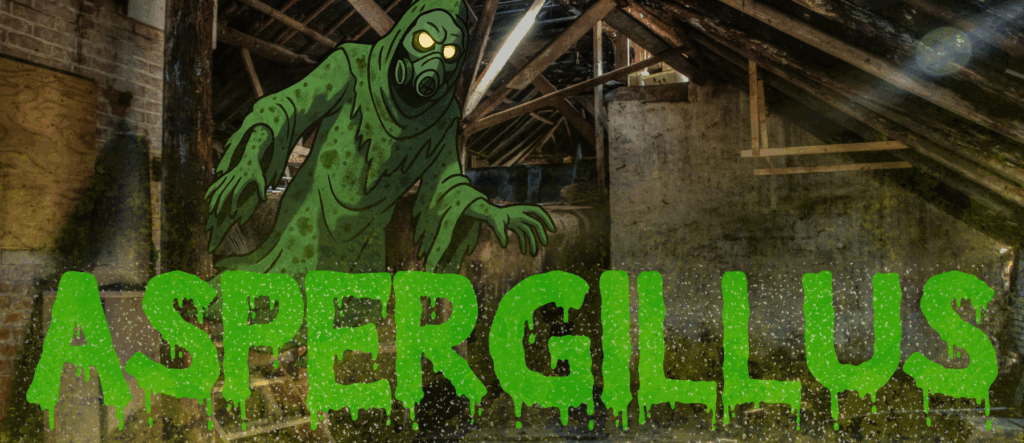
Aspergillus is one of the most common molds found in HVAC systems, especially around air vents and filters. It appears in powdery layers of green, yellow, or white and thrives in moist, poorly ventilated spaces, making a dirty or leaky air conditioner the perfect host.
Health-wise, Aspergillus is more than just an allergen. While most healthy individuals experience minor respiratory irritation, those with weakened immune systems or asthma could develop more severe conditions like aspergillosis, a serious lung infection (Centers for Disease Control and Prevention [CDC], 2023).
Penicillium
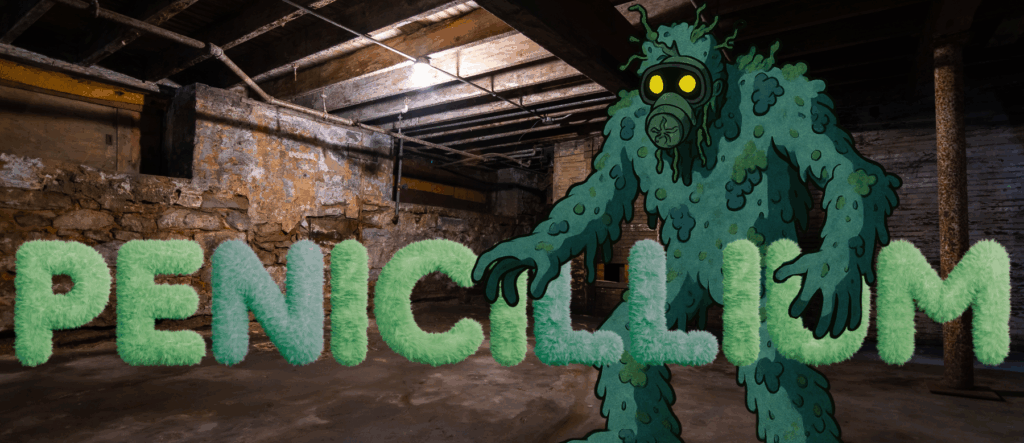
Known for its blue-green fuzzy appearance, Penicillium is another mold that favors damp insulation and wallpaper, but it also loves HVAC filters and ductwork. If you’ve had water damage or poor air circulation, you might be inviting this spore into your space.
Exposure can lead to allergic reactions, sinus infections, and chronic respiratory issues. Long-term exposure can worsen symptoms in individuals with preexisting lung conditions like COPD or bronchitis (World Health Organization [WHO], 2009).
Did You Know?
- Certain strains of penicillium are used to produce antibiotics. Not the ones in your home though.
- Some Penicillium species can produce mycotoxins, which are toxic to humans and animals (Environmental Protection Agency [EPA], 2023).
Cladosporium
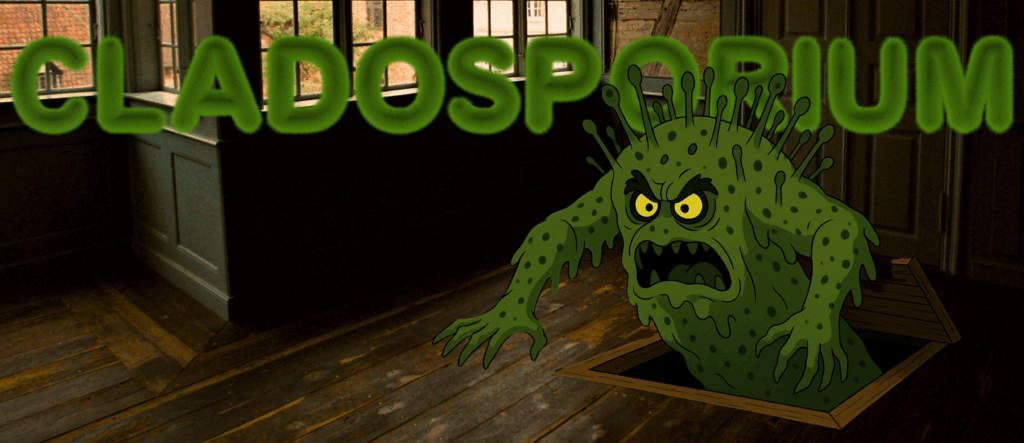
Cladosporium is another common indoor mold, known for its dark olive-green to black coloration and textured, velvety appearance. It’s often found on damp wood, fabrics, and the inside of HVAC systems, especially around air ducts and cooling coils. This mold type thrives in both cold and warm conditions, making it a frequent intruder in homes year-round.
Though it’s not typically toxic, Cladosporium is a potent allergen. It can cause hay fever-like symptoms, worsen asthma, and irritate the eyes, nose, throat, and skin. People with compromised respiratory systems are especially vulnerable. According to the CDC, Cladosporium spores are among the most common airborne mold spores and can be inhaled deep into the lungs, making prevention and air filtration critical (Centers for Disease Control and Prevention [CDC], 2023).
👀 Warning Signs Something Moldy is Afoot
How do you know your home has a mold problem? Some signs are obvious, but others are as stealthy as a haunted whisper:
- Musty Odors: That “old house” smell isn’t just nostalgia, it might be mold.
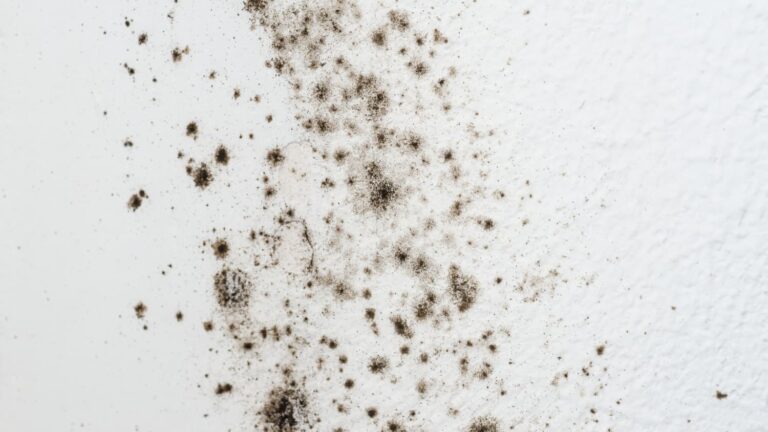
- Discoloration: Green, black, or white spots on vents, walls, or ceiling tiles.
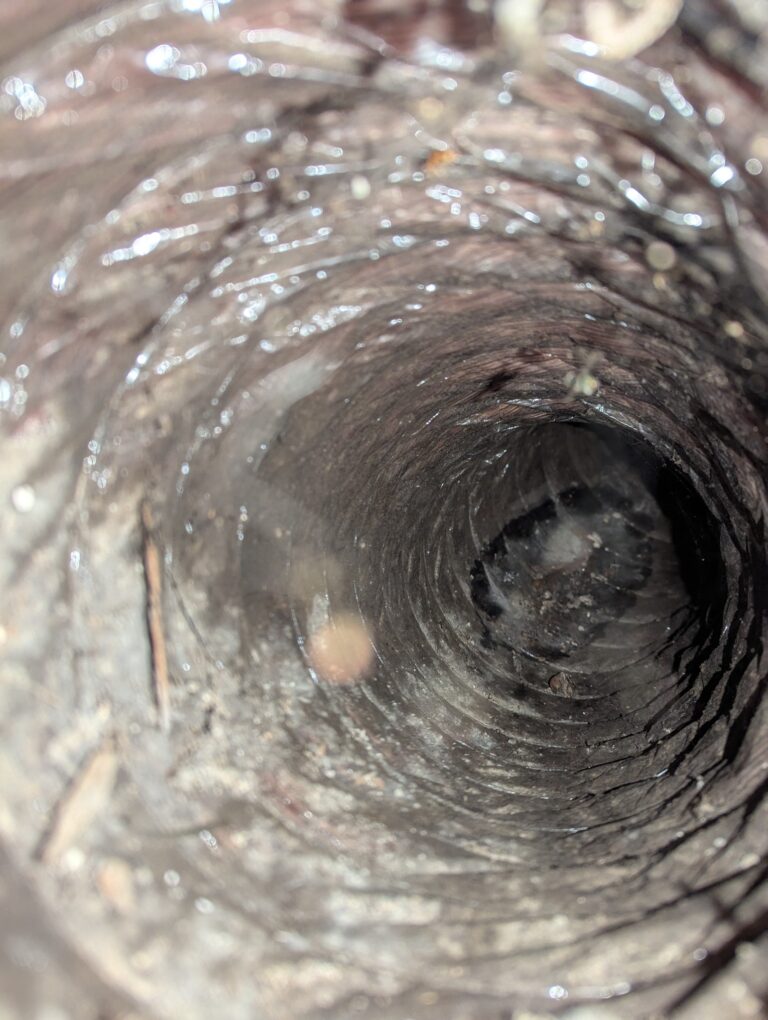
- Condensation: Excess moisture on or near ducts or windows is a breeding ground.
- Increased Allergy Symptoms: Runny noses, headaches, coughing, and itchy eyes that worsen indoors.
If these symptoms disappear when you’re away from home and return when you’re back, mold may be the invisible culprit.

🕷️ The Infamous Black Mold: Stachybotrys
Stachybotrys chartarum (often called black mold) is the stuff of nightmares. It appears dark green or black, thrives on cellulose-rich materials like drywall, and only grows in very wet conditions, which means a leaky HVAC system or unattended water damage is a big risk factor.
The EPA warns that black mold can also produce mycotoxins, like Aspergillus. It can lead to homeowners feeling fatigue, eye irritation, and in severe cases, neurological problems. While there’s ongoing debate over its exact toxicity levels, the presence of Stachybotrys always warrants professional removal (U.S. Environmental Protection Agency [EPA], 2023).
🛡️ How to Keep Mold Out of Your HVAC System
The good news? Mold is preventable. Here’s how to keep your HVAC system free from spooky spores:
1. Routine Maintenance
HVAC systems should be professionally maintained at least twice a year: once before summer, and once before winter. Cleaning coils, drip pans, and air handlers reduces moisture buildup where mold loves to grow.
Want someone to take care of maintenance for you?
2. Filter Replacements
Change your filters every 1–3 months depending on system usage, pets, or if anyone in the home has allergies. Dirty filters trap moisture and spores, turning them into a mold incubator.
3. Control Humidity
Keep your indoor humidity levels between 30–50%. A whole-home dehumidifier can help in humid climates, especially in basements or crawl spaces.
4. Seal Leaks
Duct leaks and poor insulation can draw in moisture and outdoor contaminants. Sealing your ducts not only improves energy efficiency but also blocks out mold.
Did you know?:
- HVAC systems that aren’t maintained lose up to 5% of their efficiency each year (U.S. Department of Energy, 2023).
- Mold spores can start growing on damp surfaces in just 24 – 48 hours (Centers for Disease Control and Prevention [CDC], 2023).
🧹 When to Call the Pros
If you suspect mold is present, a professional HVAC technician can inspect your system using specialized tools and safely remove contaminated components. Mold remediation is not a DIY task, especially when it’s hiding inside ducts or near sensitive electrical parts.
With Blue Ridge Heating and Air, our experts are trained to spot early signs of mold during regular tune-ups and can recommend the right indoor air quality solutions, like UV light air purifiers, MERV-rated filters, or whole-home dehumidifiers.

That’s why new technology like AirGuard takes indoor air quality to a whole new level. One of its most powerful features is its real-time mold detection and predictive analytics. AirGuard continuously monitors your system’s moisture levels, airspeed, temperature differentials, and particulate data to identify conditions ideal for mold growth, before spores even have the chance to take root.
What makes this system especially valuable is its smart prediction capability. Using historical patterns and environmental data, AirGuard can alert homeowners to potential mold risks all from their phones. These proactive notifications allow you to take action fast, whether that means increasing ventilation, scheduling a system tune-up, or adjusting humidity levels. It’s like having a mold watchdog built right into your HVAC system, giving you peace of mind and a healthier home environment.

☠️ Final Thought: Don’t Let Mold Haunt Your Home
This Halloween, skip the cobwebs that form on their own. If you’ve noticed strange smells, rising allergies, or mysterious stains near your vents, it might be more than just bad luck, it could be mold.
Heating and Cooling Issues? Click Here!
Curious what working with us looks like?
Check out our case studies complete with photos and insights. See how real-life homeowners like you tackled HVAC challenges with help from Blue Ridge Heating & Air.
📞 Need an honest review of your system’s performance?
Schedule a free comfort consultation with us today! No pressure, no pushy sales tactics. Just good folks helping you stay comfortable and save money.
✅ Get a quote
✅ Get it done right
✅ Sleep better
📚 References
- Centers for Disease Control and Prevention. (2023). Aspergillosis. https://www.cdc.gov/fungal/diseases/aspergillosis/index.html
- Centers for Disease Control and Prevention. (2023). Mold: Cladosporium. U.S. Department of Health & Human Services. https://www.cdc.gov/mold/cladosporium.html
- U.S. Environmental Protection Agency. (2023). Mold and Health. https://www.epa.gov/mold/mold-and-health
- World Health Organization. (2009). WHO guidelines for indoor air quality: dampness and mould. https://www.euro.who.int/__data/assets/pdf_file/0017/43325/E92645.pdf
- U.S. Department of Energy. (2023). Heating and cooling. https://www.energy.gov/energysaver/heating-cooling
- U.S. Environmental Protection Agency. (2023). A Brief Guide to Mold, Moisture, and Your Home. https://www.epa.gov/mold/brief-guide-mold-moisture-and-your-home