In this episode, Chris Davidson, owner and operations manager at Blue Ridge Heating & Air, explains how homeowners can compare ducted HVAC systems, ductless mini-splits, and hybrid configurations for mountain homes. He also covers ArcticFlex cold-climate performance, using existing ductwork, proper sizing and installation, and the risks of oversized or undersized equipment.
John Maher: Welcome to the Blue Ridge Heating and Air podcast, where we help homeowners in upstate South Carolina and Western North Carolina make smarter, more confident decisions about heating, cooling, indoor air quality, and whole home comfort. Today I’m with owner and operations manager, Chris Davidson, and our topic is “Ducted vs. Ductless: Is an ArcticFlex Mini-Split Right for Your Mountain Home”. Welcome, Chris.
Chris Davidson: Hey, John, thanks for having us. We appreciate it.
Mountain Home Heating and Cooling Challenges
John: Yeah, absolutely. Chris, what makes a Western North Carolina or upstate South Carolina mountain home maybe harder to heat and cool than a home in other areas?
Chris: Yeah, that’s a good question. We really try to focus on providing an overall comfort solution for that home, and we would do a heat load for that home and then tailor a solution that would fit that home. So we have a piece of software that allows us to use our iPads to scan the home and provide the right comfort solution for those homeowners. And also, due to the temperatures, we want to have a system that has a little better performance at colder climates. We don’t get it very often, but when we do, it can be pretty chilly for those homeowners who want to make sure we’ve got a system like the ArcticFlex that performs really well down to say zero degrees or minus five degrees Fahrenheit when it’s on those chilly, chilly days, right?
Choosing Ducted, Ductless, or Hybrid HVAC
John: Absolutely. So how do you decide whether ductless mini splits or maybe a more traditional heating and cooling system or even a hybrid setup makes the most sense for a homeowner?
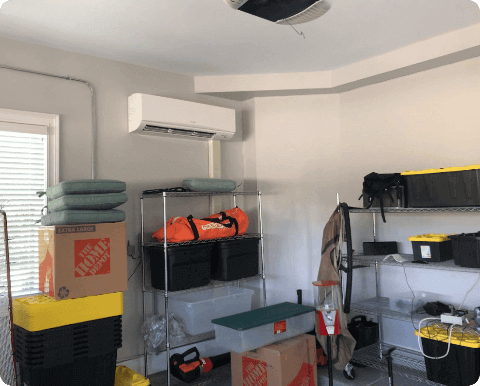
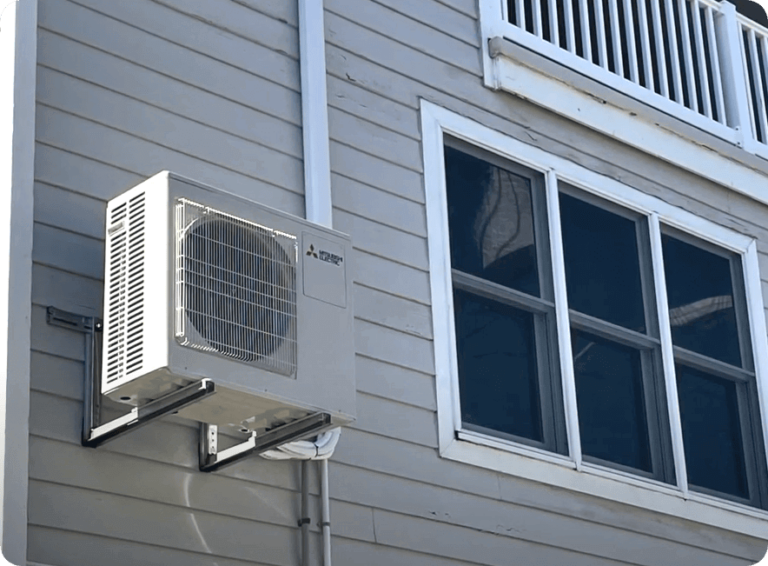
Chris: Yeah, that’s a really good question. I think it really depends on the home. As we go through and we do that overall home assessment with the client and we use our software to determine the proper heating equipment for that, we also have a discussion with that homeowner to make sure we’re tailoring our solution to help them solve all of the problems that they may have. For example, if a homeowner had a ducted system in there and they just wanted to go back with something, then we would provide that kind of solution. If they wanted to have independent control over different pieces of their house or rooms of their house, we could add mini splits to a ducted system or we could use more of a mini split approach to try to provide overall comfort control room by room for homes.
Ductless Mini-Split and Heat Pump Advantages
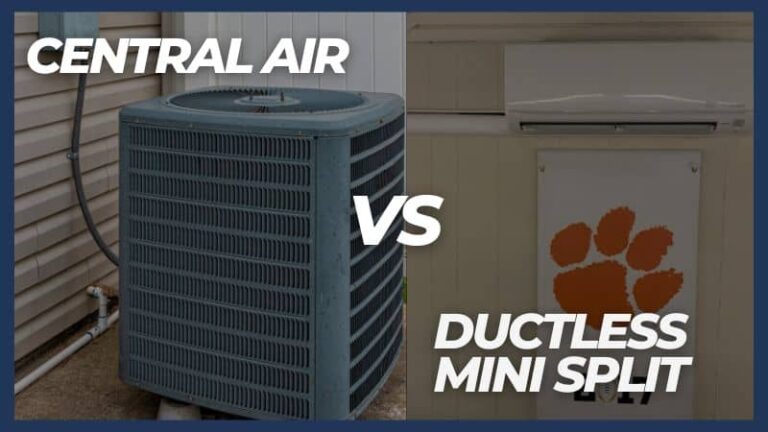
John: Can you speak to that a little bit more in terms of, especially with the mini splits, maybe people aren’t as familiar with that. They’re used to a traditional system, they’ve got a furnace in their home for their heat, maybe they’ve got a central air conditioning system or they did at one point and now they’re considering doing a mini split system and a heat pump. What are some of the advantages to heat pumps over a more traditional system?
Chris: As far as a mini split or say a ductless unit in a house, depending on how the customer wanted to lay that out and what would best fit their home, you can provide a independent control in maybe the living room versus the master bedroom, those kind of things to provide better comfort. You may like to sleep at 65 degrees Fahrenheit, you may want your living room at 75. So, we want to be able to allow the customers to do that without having a large kind of behemoth system changing the temperature of the home all the time.
So those would be the kind of things that we’d work with with customers. We’ve done many of these in the past where they would solve that very, very problem or potentially they wanted something on the lower floor that didn’t have an opportunity for duct work. So we could use one of these ductless systems to provide cooling and maybe a bonus room above a garage or a basement, something like that to help a customer control those areas if they already had a traditional ducted system in place.
Using Existing Ductwork with an ArcticFlex Heat Pump
John: Yeah. So if a home already has ducts built in and a homeowner is interested in a heat pump system, can you reuse that duct work with a heat pump and how does that work?
Chris: Yeah, absolutely. You can convert a customer from say a gas furnace over to a heat pump, and that’s why we like to use the ArcticFlex, which is a cold climate technology, and it helps us to heat that home without the auxiliary heat down to much colder temperatures. So for example, Ben on our team installed two of these in his house, one for his lower floor and upper floor, and he removed his gas furnaces altogether and didn’t install any heat strips and is very comfortable on those cold, cold days in the winter.
So electric systems are becoming more and more popular to replace traditional gas furnaces and other heating mechanisms without the use of some heat strips. Sometimes we add auxiliary heat strips in there to allow customers just that sense of security and that backup if that were to fail or it was extremely cold where they needed just a little additional heat to keep them warm in the winter climates.
ArcticFlex Performance in Freezing Temperatures
John: With the ArcticFlex systems, you’re saying that it can be into the negative temperatures outside and still be providing heat for the home?
Chris: Yeah, I don’t think we’ve seen negative temperatures in South Carolina in a while, but it’ll definitely dip down into the single digits sometimes, and those times can be very uncomfortable for customers. It can make them nervous that their system can’t keep up, but a cold climate heat pump like the ArcticFlex does a really good job of providing almost gas temperature-like heat in that winter. We’ve also installed one of these at our shop in North Carolina. If any customer wanted to come by and check that out, they’re more than welcome to just to see how it performs. And the team has been very, very happy with that.
What ArcticFlex Heat Pump Reviews Should Cover
John: If homeowners are researching ArcticFlex heat pump reviews, what real world performance detail should they pay attention to beyond just the efficiency ratings?
Chris: Yeah, so there’s efficiency ratings, but there’s also how that system performs at very low temperatures. So you can ask your HVAC supplier or we’ll gladly share that information with you, but as that temperature drops off, a traditional heat pump is going to lose its ability to generate heat. These heat pumps maintain that curve 100% down to minus five degrees. So it keeps the customer very, very comfortable. And that’s really the difference between the cold climate heat pump and a traditional heat pump. And I think that’s why customers have shied away from replacing that warm gas heat with a heat pump because it doesn’t do as well at the lower temperatures, but the ArcticFlex does do well down at those temperatures.
Proper Mini-Split Sizing, Installation, and Support
John: What are some of the things that a homeowner should ask of a contractor as they’re doing their initial research and before scheduling a ductless mini split installation so that they know that the system is being engineered correctly and being sized correctly for their home?
Chris: Yeah, that’s a great question. I think as the initial consultation is going on, that homeowner wants to make sure that that system is being sized properly. So we use some software that allows our technicians and project manager to walk around that home and it uses a LiDAR system to scan each and every room and make sure we’ve got the heat and cooling capacity of those rooms documented to make sure that we can properly size that system.
And then you also want to make sure that the contractors install it properly, that installation is one of the most important days in the life of a system. So we want to make sure it’s properly installed, proper vacuum, proper evacuation, proper brazing techniques if that’s going to occur. And then, of course, that after installation product sales, in some cases we’ll see systems getting installed and then that contractor may not go back to support those systems.
So that’s extremely important. You’d want to research the reviews, Better Business Bureau, other places like that to make sure that that contractor stands behind their work and they come back to fix a problem if something were to occur. We have seen specifically in parts of Western North Carolina, systems get abandoned and we’ll have to go help those homeowners get those systems started up after the contractor has installed them. So it’s unfortunate, but it does happen. So just homeowners should spend a little extra time researching that, talking to other folks and making sure that the contractor does support their system.
Risks of Oversized and Undersized HVAC Systems
John: You said that you go through the right procedures and the calculations to make sure that you’re installing the properly sized system for a home. What are some of the dangers if you end up with a system that’s either too small or too large for your home?
Chris: It’s pretty easy if the system is too small, it would end up running all the time and not be able to maintain a temperature in the house. If the system is too large, it’s a little bit harder to tell. It’s going to maintain temperature, but it’s going to cycle a lot, so it’ll put extra wear and tear on there. Sometimes if the system is upsized without the proper duct work, it could shorten the life expectancy of that system. And some of the worst cases, if systems are way oversized, then you could get potential microbial and mold growth in your duct work because of condensation of the starting and stopping of that system. It would make very cold duct work and then it would turn off and then you would get potential microbial growth in there.
And personally, I think that’s what happened in my house before we purchased it. I think the system was way oversized. I downsized it when I moved in there and it loaded up that duct work with mold, so it all had to be removed. It all had to be replaced. So it seems like just bigger is better, but in this case it’s not. It can create other issues, not so much short term, but longer term to the home and to the structure. So it’s important to make sure it’s properly sized.
John: Right. Especially when you’re talking about air conditioning, if it’s oversized, you end up cooling off the house so fast that it doesn’t have a chance to get a lot of the humidity out of the air. So you end up with this kind of cold, but wet and clammy kind of feeling in a house, right?
Chris: Yeah, that’s way true, right? Yes, sir.
John: All right, well, that’s really great information, Chris. Thanks again for speaking with me today.
Chris: Oh, thanks for the time. Really appreciate it, and thanks for being a part of this.
John: And for more information, you can visit Blue Ridge Heating & Air’s website at blueridgeheatingair.com or call us in the Greenville, South Carolina area at 864-485-6509 or in the Brevard, North Carolina area call 828-415-3339.