Carolina Pollen Season & Your HVAC: How to Protect Your System (2026 Guide)
If you’re currently living in the Carolinas, you’ve witnessed the phenomenon. It starts with a single warm afternoon in late February or early March. By the next morning, every car on the street has transitioned from its original color to a uniform, fuzzy shade of neon chartreuse.
In the South, we don’t just have a pollen season; we have a pollen event. While we stock up on antihistamines and car wash memberships, there is one critical member of your household that is literally gasping for air: your HVAC system.
To help your home stay cool and your air stay breathable, let’s dive deep into the mechanical relationship between the Carolina “Yellow Dust” and your heating and cooling system.
Understanding the Carolina Pollen Cycle
The Carolinas face a unique biological challenge. Our geography (nestled between the mountains and the coast) creates a perfect “pollen bowl.” Pollen season can begin as early as February and extend through October, meaning your HVAC system faces sustained biological pressure for a significant portion of the year (Allermi, 2025).
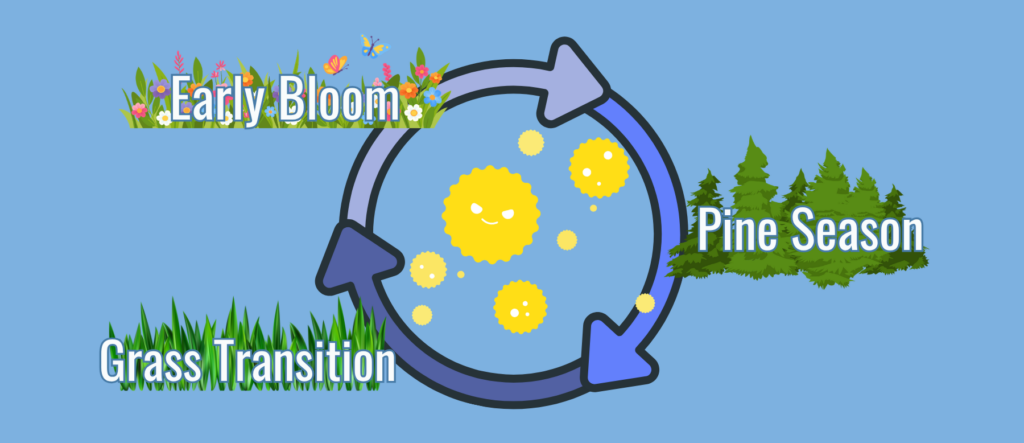
The Early Bloom (February/March)
Trees like Juniper, Cedar, Elm, and Maple kick things off with the first wave of pollen.
The Heavy Hitters (Late March/Early April)
This is “Pine Season.” Pine pollen is large, heavy, and highly visible, creating the yellow coating on cars and outdoor surfaces. However, it is important to note that pine pollen is actually less allergenic than the microscopic pollen from hardwood trees like oak, hickory, and ash. The yellow dust is more of an aesthetic and HVAC nuisance than the primary driver of allergy symptoms (WCNC Weather IQ, 2024).
The Overlap & Grass Transition (April–June)
Grass pollen does not simply wait for pine season to end. In North Carolina, grass pollen typically begins in April and can persist through September, overlapping significantly with tree pollen season. This means many allergy sufferers face a double assault in April and May (Allermi, 2025).
Because our “Pollen Pocalypse” can last for three months or more, your HVAC system is
under sustained biological pressure for nearly a quarter of the year.
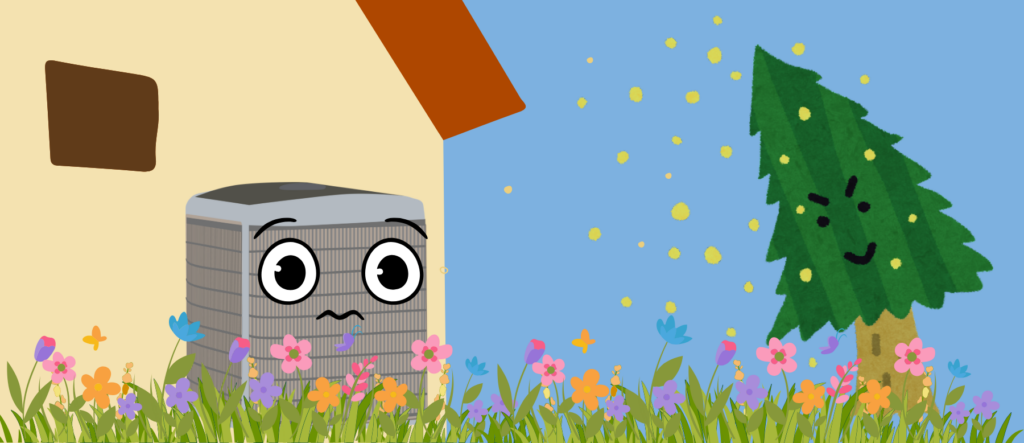
How Pollen Attacks Your HVAC Anatomy
To understand the risk, we need to look at the two main stages where your HVAC interacts with the environment: the Outdoor Condenser and the Indoor Air Loop.
1. The Outdoor Condenser: The “Choke Point”
Your outdoor unit is designed to pull air through its metal fins to release heat from the refrigerant coils inside. Think of these fins like the radiator in your car.
The Problem: Pollen (especially when mixed with humidity) can form a sticky residue that clings to HVAC condenser coils, fan blades, and protective grilles.
The “Blanket Effect”: Over a few weeks, that yellow dust forms a literal mat over the coils, creating an insulating layer that prevents heat from escaping.
The Consequence: When pollen settles on the condenser coil, it impedes the coil’s ability to release heat. The buildup can lead to overheating of the air conditioner and, if the high-limit switch is tripped, an unexpected shutdown (Merrell Air, 2021).
2. The Indoor Filter: The “Lung” of the Home
While the outdoor unit handles the heavy lifting, your indoor unit handles the breathing.
Airflow Restriction: HVAC systems are designed for specific static pressure levels. When a filter is clogged with pollen, the motor has to work significantly harder to pull air through.
Blower Motor Wear: Imagine trying to breathe through a thick wool sweater while running a marathon. That is what your blower motor endures during a Carolina spring. Eventually, the motor can burn out from the sustained resistance.
The Indoor Air Quality (IAQ) Factor
Many people assume that staying indoors with the windows shut provides complete protection from pollen. However, pollen is a master hitchhiker. It enters via:
- Open doors as you enter and exit
- Pet fur (dogs are essentially mobile pollen mops)
- Your own hair and clothing
- Gaps in window seals or ductwork
Once inside, if your HVAC system isn’t filtering effectively, it becomes a pollen circulator. Instead of removing allergens, it simply blows them from the floor back into the breathing zone, keeping allergy symptoms active long after you’ve come indoors.
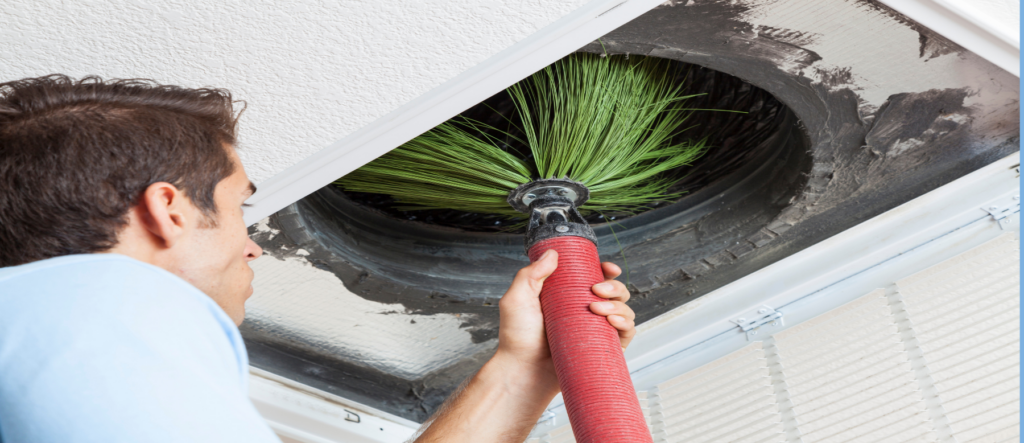
Five Steps to “Pollen-Proof” Your Home
#1: The “Hose Down” Technique
You don’t need a professional to keep your outdoor unit clear, but you do need a garden hose. Once a week during peak yellow season, turn off your AC at the thermostat and gently spray the outdoor fins from top to bottom.
Warning: Never use a pressure washer. The fins are made of soft aluminum and can bend easily, which permanently restricts airflow.
#2: Upgrade Your Filtration (But Not Too Much)
Filters are rated by MERV (Minimum Efficiency Reporting Value), a standardized scale developed by ASHRAE (the American Society of Heating, Refrigerating and Air-Conditioning Engineers) (Carrier, 2024).
MERV 1–4: Basic filters that do capture some larger particles including pollen and dust mites, but at low efficiency. Not recommended for households with allergy concerns.
MERV 8–11: The “Sweet Spot.” These catch the majority of pollen and mold spores while maintaining adequate airflow. Recommended for most Carolina homes (Carrier, 2024).
MERV 13+: Excellent for capturing fine particles including bacteria and smoke. However, these are thicker filters that can restrict airflow and strain systems not designed for them. Always verify compatibility with your system before upgrading (Bryant, 2026).
#3: The “Fan On” Strategy
On particularly high-pollen days, switching your thermostat setting from “Auto” to “On” keeps air moving through your filtration system continuously, scrubbing the air even when the AC isn’t actively cooling.
Note: In the humid Carolinas, this setting should be used with some caution. When the fan runs without active cooling, it is not dehumidifying the air, which can allow moisture to accumulate on the indoor evaporator coil. Use this setting strategically on dry, high-pollen days rather than continuously.
#4: Manage the “Entry Points”
In the Carolinas, we love our screened-in porch weather. However, if you leave the door between the porch and the house open, you are inviting millions of spores into your ductwork. Keep the house sealed tight until the “Yellow Wave” has passed.
#5: Professional Coil Cleaning
At the end of the season, even a garden hose can’t remove everything. A professional technician uses alkaline or acidic foaming cleansers that dissolve sticky resins that water alone can’t touch. A post-pollen tune-up is the best way to ensure your system is ready for the 90°F+ humidity of a Carolina July.

The Economic Impact: Why Maintenance Matters
Think of HVAC maintenance during pollen season as an investment rather than an expense.
Efficiency: A clean system can run significantly more efficiently than a neglected one, reducing monthly energy costs.
Longevity: Most well-maintained central air conditioning units in the Carolinas should last 15 to 20 years. That broader range is the industry consensus from major manufacturers (Lennox, 2025; Carrier, 2024). Pollen-related neglect can meaningfully shorten that lifespan.
Health: Reducing the pollen load in your home reduces doctor visits and the cost of allergy medications.
Final Thoughts
Living in the Carolinas means accepting the yellow dust as a way of life, but your HVAC system shouldn’t have to suffer for it. By spending 10 minutes a week rinsing your outdoor unit and staying diligent about your indoor filters, you can ensure that the only thing “yellow” this spring is the beautiful Carolina jasmine. Not your repair bill.
And remember: the yellow pine pollen you can see is less of an allergy villain than you might think. The real microscopic offenders (oak, hickory, ash, and grass pollens) are invisible to the eye but very real to your sinuses. Your HVAC system is your first and best line of defense against all of them.
FAQ:
Why are my allergies still bad even with a clean filter?
Does Blue Ridge Heating and Air clean and/or repair air ducts?
Call Us:
North Carolina: (828) 372-5324
South Carolina: (864) 713-9687
When is the best time to schedule HVAC maintenance after pollen season?
Does Blue Ridge Heating and Air sell air filters?
Check it out here!
📞 Is your home ready for the future of comfort?
Let’s make sure your family is breathing the best quality air.
✅ Get a quote
✅ Get it done right
✅ Sleep better
What Our Clients Say
Resources:
- Allermi. (2025). When is allergy season in North Carolina? Start, peak, and end (2025). https://www.allermi.com/blogs/allergy-101/allergy-season-north-carolina
- WCNC Weather IQ. (2024). When is North Carolina’s yellow pollen done? https://www.wcnc.com/article/weather/weather-iq/when-the-yellow-pollen-is-done/275-d37924ab-5de8-4595-9e6f-7b0a7dd72679
- Merrell Air. (2021). High pollen counts can affect IAQ and your HVAC system’s performance. https://merrell-air.com/blog/high-pollen-counts-can-affect-iaq-and-your-hvac-systems-performance
- Carrier. (2024). What is a MERV rating? https://www.carrier.com/residential/en/us/products/indoor-air-quality/what-is-merv-rating/
- Bryant. (2026). What is a MERV rating? Air filter guidelines. https://www.bryant.com/en/us/about-bryant/glossary/merv-rating/
- Lennox. (2025). How long do air conditioners last? https://www.lennox.com/residential/lennox-life/consumer/how-long-do-air-conditioners-last
- North Carolina State Climate Office. (2024, April 4). Rain returns and pollen proliferates in a warm March. https://climate.ncsu.edu/blog/2024/04/rain-returns-and-pollen-proliferates-in-a-warm-march/