2026 HVAC Industry Shift: New Refrigerant Rules & AI Technology
Are you wondering if your home comfort system is ready for the major federal changes hitting the HVAC industry this year?
The landscape of American home comfort is undergoing its most significant transformation in decades. As of January 2026, homeowners are facing a “perfect storm” of technological advancement and regulatory shifts. We believe that an educated homeowner is a confident one. This guide explores the transition to eco-friendly refrigerants, the rise of predictive AI, and the evolving financial incentives available in the Carolinas.
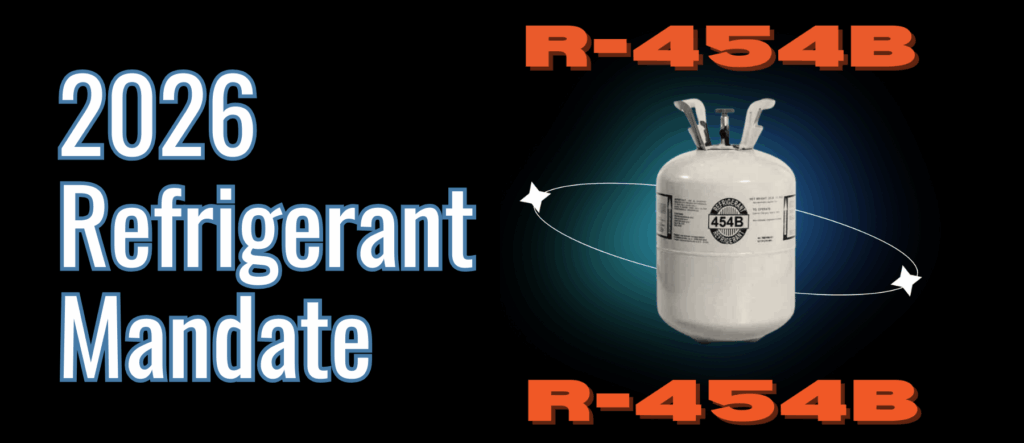
The 2026 Refrigerant Mandate: What is R-454B?
Starting January 1, 2026, the Environmental Protection Agency (EPA) has fully enforced the transition to low Global Warming Potential (GWP) refrigerants for residential and light commercial systems. The industry is moving away from the long-standard R-410A in favor of A2L refrigerants, such as R-454B and R-32 (Copeland US, 2025).
But what is R-454B (also known as Opteon™ XL41 or Puron Advance™)? It’s the next-generation refrigerant blend designed to replace R-410A in new residential and commercial HVAC equipment.
Service for Legacy Systems: While new R-410A systems can no longer be manufactured, there are currently no restrictions on purchasing parts or refrigerant to service your existing unit. However, the 15-year HFC phasedown is expected to drive up the price of R-410A as supplies decrease.
Environmental Impact: These new refrigerants offer up to a 78% reduction in GWP compared to R-410A, and it has zero Ozone Depletion Potential (ODP) (Johnson Controls, n.d.). R-454B can also improve HVAC system energy efficiency by up to 5% compared to R-410A designs.
System Compatibility: It operates at pressures and temperatures very similar to R-410A, which helps simplify the transition for equipment designers and technicians. However, it’s not a “Drop-In” Replacement. R-454B cannot be used in existing R-410A systems. Because it is mildly flammable, it is restricted by code to systems specifically engineered with the necessary safety components and redesigned compressors (Copeland US, 2025).
Safety Protocols: It is classified as A2L, meaning it is non-toxic but mildly flammable. 2026 systems designed for R-454B include Refrigerant Detection Systems (RDS) which are new built-in leak sensors and include mitigation strategies which disengage the compressor and activate fans to disperse gas if a leak is detected.

Navigating the Post-Tax-Credit Landscape
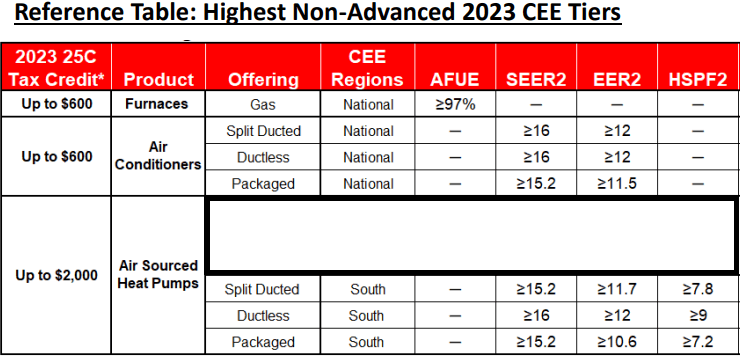
While major federal tax credits (Sections 25C and 25D) expired for property placed in service after December 31, 2025, new state-level programs have launched to fill the gap:
Utility Programs: Providers like Dominion Energy SC offer rebates for installing ENERGY STAR-qualified heat pumps and making ductwork improvements.
Energy Saver North Carolina: This program offers significant rebates through the HEAR and HOMES initiatives. Income-eligible households may qualify for up to $8,000 for an ENERGY STAR-certified heat pump and up to $1,600 for air sealing and insulation (North Carolina Department of Environmental Quality, 2026).
South Carolina Rebates: Expected to launch statewide in 2026, the SC Home Energy Rebate initiative will provide up to $14,000 for electrification upgrades and $16,000 for whole-home energy improvements (South Carolina Energy Office, 2026).

Predictive Comfort: The Power of HVAC AI
HVAC systems in 2026 have transitioned from reactive machines to proactive home partners. Modern units now utilize Artificial Intelligence (AI) to optimize performance and protect your investment (DigitalDefynd Education, 2026).
Occupancy Awareness: If sensors detect an empty room, AI can automatically scale back conditioning to conserve energy, maintaining comfort only where it is needed.
Predictive Maintenance: AI algorithms monitor operational data like power draw and vibration to diagnose issues such as mechanical wear or blockages before a total breakdown occurs (BrainBox AI, 2025).
Energy Optimization: By analyzing real-time data from occupancy sensors and weather forecasts, AI can reduce energy consumption by 20% to 50% in residential settings (The Quantum Insider, 2025).
Grid Interactivity: Many 2026 systems are “grid-interactive,” allowing them to communicate with utility providers to shift energy loads during peak times, which can stabilize the grid and earn homeowners direct bill credits (DigitalDefynd Education, 2026).
Repair vs. Replace: Making the Right Call
When a major component fails, it’s time to weigh repair costs against a new, high-efficiency system.
The “30-50% Rule”: Professionals often recommend replacement if a repair quote approaches 30% to 50% of the cost of a new system, especially if the current unit is over 12 years old (Honest Fix, 2026).
Repair Costs: In 2026, standard repairs like capacitors range from $100–$250, while major failures like compressor replacements can cost between $800 and $3,000 (On the Go H-A-C, 2025).
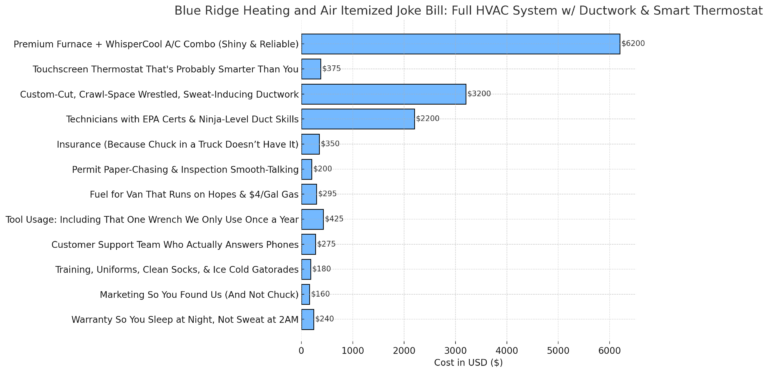
Replacement Costs: A full HVAC system replacement in 2026 typically ranges from $10,500 to $16,500 (Modernize, 2025).
Want someone to take care of maintenance for you?

Final Thoughts
Choosing the right heating and air setup for your home in 2026 is no longer just a transaction; it is an investment in a smarter, greener, and more intentional future. Think of these industry shifts not as hurdles, but as the wind in your sails, guiding you toward a home that is as efficient as it is comfortable. Whether you are embracing the precision of AI diagnostics or the steady reliability of a new SEER2 system, you are doing more than just changing a unit. You are engineering a better environment for your family.
If you’re seeing warning signs, or if your furnace is getting aged and worn, let us take a look. We believe in helping you make the best decision, not just the quickest fix. We’ll inspect, we’ll explain, and we’ll guide you toward a solution that works for your home and your budget.
Heating and Cooling Issues? Click Here!
Curious what working with us looks like?
Check out our case studies complete with photos and insights. See how real-life homeowners like you tackled HVAC challenges with help from Blue Ridge Heating & Air.
📞 Is your home ready for the future of comfort?
Schedule a $59 Indoor Air Quality & Tech Assessment with us today. We’ll evaluate your current system’s efficiency and check your eligibility for new state rebates!
✅ Get a quote
✅ Get it done right
✅ Sleep better
Resouces:
- BrainBox AI. (2025). How AI optimizes legacy HVAC systems without breaking the bank. https://brainboxai.com/en/articles/how-ai-optimizes-legacy-hvac-systems-without-breaking-the-bank
- Copeland US. (2025). Air conditioning industry regulations. https://www.copeland.com/en-us/expertise/hvacr-regulations/ac-industry-regulations
- DigitalDefynd Education. (2026). 10 ways AI is being used in air conditioning & HVAC [2026]. https://digitaldefynd.com/IQ/ai-in-air-conditioning-hvac/
- Honest Fix. (2026). Repair vs replace HVAC cost in Wintersville, OH (2026–2027). https://honestfix.com/blog/repair-vs-replace-hvac-cost-wintersville-oh
- Johnson Controls. (n.d.). Behind the low-GWP refrigerant transition: R-454B and A2Ls. Retrieved January 6, 2026, from https://www.johnsoncontrols.com/navigating-the-refrigerant-transition
- Modernize. (2025). New HVAC system cost calculator: Get a custom estimate in 2026. https://modernize.com/hvac/cost-calculator
- North Carolina Department of Environmental Quality. (2026). Energy Saver North Carolina. https://www.deq.nc.gov/energy-climate/state-energy-office/energy-saver-north-carolina
- On the Go H-A-C. (2025). HVAC repair costs: How much will you have to spend? https://onthegohac.com/cost-of-hvac-repair/
- South Carolina Energy Office. (2026). South Carolina home energy rebates. https://energy.sc.gov/rebates
- The Quantum Insider. (2025). Scientists report quantum AI could cut home energy consumption. https://thequantuminsider.com/2025/10/02/scientists-report-quantum-ai-could-cut-home-energy-consumption/