Protecting Your Family with Modern Furnace Safety
As the winter chill settles into the Blue Ridge Mountains and across the Upstate, our furnaces become the heart of our homes. But like any powerful machine, a gas furnace requires respect and a clear understanding of its safety systems. At Blue Ridge Heating & Air, we believe that education is the ultimate tool for home comfort.
One of the most frequent topics we address in our seminars is Carbon Monoxide (CO), often referred to as the “Silent Killer”. Today, we’re diving deep into the science of furnace safety and how the new technology standards of 2026 are changing the way we protect our families.
Understanding the “Silent Killer”
Carbon Monoxide is a byproduct of incomplete combustion. In a perfect world, your furnace burns natural gas or propane cleanly, and all exhaust is safely funneled out of your home through a flue pipe. However, if a system is dirty, damaged, or poorly installed, that process breaks down.
What makes CO so dangerous is its stealth: it is completely colorless, odorless, and tasteless. According to the Centers for Disease Control and Prevention (2024), without a mechanical detector, the human senses cannot pick up its presence until physical symptoms like headaches, dizziness, and fatigue begin to set in.
The Role of the Heat Exchanger
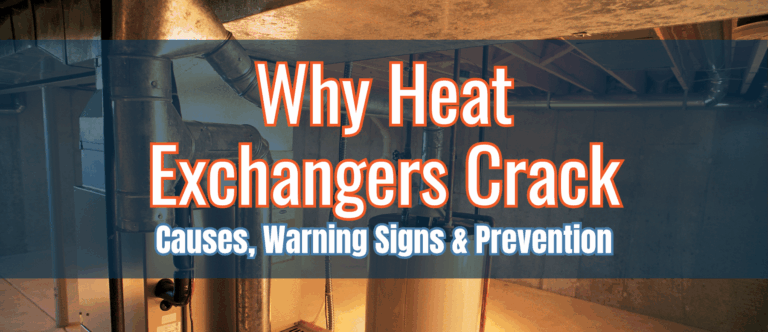
The primary defense against CO is your furnace’s heat exchanger. Think of it as a solid metal wall. On one side of the wall is the fire and toxic exhaust; on the other side is the air that circulates through your home. As long as that metal wall remains intact, you stay warm and safe. However, over 15 to 20 years, the constant heating and cooling of that metal causes it to expand and contract.
Eventually, small cracks can form, allowing toxic gases to leak into your living space. Modern safety protocols established by the American National Standards Institute & CSA Group (2024) dictate rigorous standards for these gas-fired central furnaces to ensure that this barrier remains the most important metal in your home.
Furnace Safety Controls vs. CO Detectors
There is a common misconception that a CO detector on your wall is the only safety device you need. In reality, a safe home relies on two distinct “layers” of protection:
1. Furnace Safety Controls (Prevention): These are internal sensors like flame sensors and limit switches. They are designed to shut the furnace down the moment they detect a problem. The National Fire Protection Association (2024) outlines strict guidelines in the National Fuel Gas Code to ensure these safety controls prevent combustion issues before they reach your living area.
2. CO Detectors (Alerting): These are your “last line of defense.” They don’t fix the furnace; they simply tell you that the internal safety controls have failed and you need to exit the building immediately.
Pro Tip: Most wall-mounted CO detectors only last 5 to 10 years. If yours is older than your smartphone, it’s likely time for a replacement

The 2026 Standard: Predictive Maintenance and Smart Sensors
As we move through 2026, the HVAC industry has seen a massive shift toward Inverter Technology and Smart Sensors. Modern systems, such as the Arctic Flex, are designed with intelligence that older “single-stage” furnaces simply don’t have.
- Refrigerant Transition: Under the Environmental Protection Agency (2025) technological transitions (AIM Act), new residential systems use low-GWP refrigerants and are often equipped with mandated leak sensors that activate blowers to dissipate gases automatically if a leak is detected.
- Safety Vigilance: It is also critical to stay informed on manufacturer reliability. The U.S. Consumer Product Safety Commission (2025) provides ongoing alerts and recalls, such as those recently issued for specific gas/electric packaged units, to ensure faulty equipment is removed from homes before an incident occurs.

Is Your Home Protected?
Even the smartest furnace in the world cannot replace the value of a professional inspection.
Routine maintenance can reduce the risk of major breakdowns by up to 95%. At Blue Ridge Heating & Air, our Comfort Plan is built to give you peace of mind by catching these “invisible” issues before they become emergencies.
Heating and Cooling Issues? Click Here!
Curious what working with us looks like?
Check out our case studies complete with photos and insights. See how real-life homeowners like you tackled HVAC challenges with help from Blue Ridge Heating & Air.
📞 Is your home ready for the future of comfort?
Schedule a $59 Indoor Air Quality & Tech Assessment with us today. We’ll evaluate your current system’s efficiency and check your eligibility for new state rebates!
✅ Get a quote
✅ Get it done right
✅ Sleep better
Resouces:
- American National Standards Institute (ANSI) & CSA Group. (2024). ANSI Z21.47/CSA 2.3: Gas-fired central furnaces. https://www.csagroup.org/store/
- Centers for Disease Control and Prevention. (2024). Carbon monoxide poisoning: Prevention and education. https://www.cdc.gov/co/faqs.htm
- Duke Energy. (2026). Smart saver rebates for residential heating and cooling. https://www.duke-energy.com/home/products/smart-saver/hvac
- Environmental Protection Agency. (2025). Technological transitions under the AIM Act: Residential heating and cooling. https://www.epa.gov/climate-hfcs-reduction/technological-transitions-aim-act
- National Fire Protection Association. (2024). NFPA 54: National fuel gas code. https://www.nfpa.org/codes-and-standards/all-codes-and-standards/list-of-codes-and-standards/detail?code=54
- U.S. Consumer Product Safety Commission. (2025). Recalls and safety alerts: Trane and American Standard gas/electric packaged units. https://www.cpsc.gov/Recalls